Showing posts with label country music. Show all posts

Tuesday, July 19, 2011

True Blue Fan (TBF)

Many artist & their bands can sing & play, but, they are amazed (sometimes mad) when the audiences fail to connect with them.  Artist and bands work on perfecting their play list of songs to sound like the studio version or the 'cover' version they hear. On stage, it's entertainment time!  If I go see a movie and it doesn't entertain, connect, excite me, then most of the time I actually take short naps.  Most artist/band never think about changing up a song to allow it to 'CONNECT' with their audience. And, if you don't connect and create special moments of memory, then, in most cases you will not have won over new fans & you certainly will not have what every artist should strive to have and that is:  TRUE BLUE FANS!  Yes, that is a KSE exclusive.  TRUE BLUE FAN OR TBF IS WHAT EVERY ARTIST MUST HAVE to create longevity as an INDIE touring band.  TBF are those people that will become the most important part of your TEAM.  In short, they are the ones that will show up for your shows with new fans & they are the ones that will buy tickets, merchandise, and leave tips in your tip jar.  As we all know most young inexperienced bands can only tour if they can meet expenses.

Developing into an entertainer takes time, much practice, money, and developing TRUE BLUE FANS!  It's like going from grade school, Jr. High, High School to getting your Bachelors, Masters and your PhD.  After you have completed those degrees, you need continuing updates and training....All Roads that lead to the STAGE must be incrementally improved each year, but, only after an artist has mastered all the baseline stages.  Once this is accomplished, an artist/band will forever be developing their passion for creative performances that make connecting memorial moments that last with their new fans that will change into TBF.

Monday, June 27, 2011

"A body can pretend to care; but they can't pretend to be there."

Indie Female Artist Must Consider, Daily, these Questions:

  • Who Are You
  • What is your style
  • How Is It Special
  • How is it Different from Other Artists
  • Plans for the next 10 years; stepping stones to success. Need breaking down into 2 year specific increments.  Will need adjusting, dependent on your success and failures.
  • Stage Presence
  • Fans and True Blue Fans
  • Music (Originals/Covers)
  • Song Development ( How many do your and your band know; how many sets can you perform at each gig...must know 3-5 sets to get booked at a majority of venues)
These are but a few of the many areas a Indie Artist must know.

Independent Music Promotion on the Web: 3 Steps to Success

Let's face it, the wildfire spread of web-based portals designed to introduce independent music to the world has created a bewildering array of opportunities and costs. So where do they all balance out? When does the cost of signing up to yet another music promotion service yield results? What results are we looking for anyway?


The key is to make your web promotion targeted, systematic and rich.

What is the main drive for independent artists promote their music on the web? The fundamental incentive for web promotion is the opportunity to get your music heard by people who might otherwise never know that you exist! If people know you exist they can become fans and repeat-listeners. Which of those fans buy CD's and downloads? Targeted listeners.

The most important goal of web promotion is to attract targeted listeners.

Any independent artist who says they use the web to sell their music has missed the primary target - attracting targeted listeners. Attracting targeted listeners should be every independent artist's first priority. Remember, you don't sell your music - listeners BUY your music. It's a buyers market. The more targeted listeners you have, the more sales you make - provided you are systematic in getting your targeted listeners.

The best way to get targeted listeners is to be systematic.

Many artists tend to approach their web promotion thinking that since they have a website and have signed up to a couple of artist showcase sites, that the listeners will just come pouring in. Yes you have managed to target some potential listeners, but you still have to shout, "Hey, over here...you'll like the sound of this!" A systematic approach to getting listeners to hear your music will attract and maintain their interest. But remember to make sure you have the content ready for the listener to enjoy.


Sites rich in content will retain your targeted listener.

In the independent artist's case, the rich content is the music. This may seem like old news, but look at the amount of independent artist websites that give the visitor loads of info about the band but very little (or hidden) ear candy. Music should be the first thing a visitor gets. At the very least they need an obvious link to where they can listen to your music. And not just one or two tracks but a variety of your music. Independent artists have to remember they have not had the radio exposure to model the presentation of their music after more well established acts. Listeners need to be convinced they like your independent music before they will buy it.

So the question is how to make your web promotion targeted, systematic and rich?

Tips for Targeting

The best targeted listeners on the web will be those that make it to your website. Find a way to know who they are. Setup a newsletter and make it easy to sign up to it. People interested enough to want to receive news about you are your hardcore web fans, keep them happy.

The next best group of targeted listeners are those that hear your music on other sites. Try to pick sites that allow listeners to link to your site. If they like your music they might click on that link to visit your site. You can then find out where these visitors are coming from. Find a good web statistics package that lets you know which sites your visitors are being referred from. Take note of those sites and focus your efforts with them accordingly.

When choosing sites on which to promote your music, check to see if they offer any individual stats relating to your music. Like how many track plays or page views you and your music receive on their site. This way you can check in periodically and monitor your performance with these sites.

Systematic Steps

The key to being systematic is organization. Keep a note of all the sites you use to promote your music, a brief description of what they do and how much it costs. Try to get into the practice of monitoring all of them regularly. Take note of which sites are getting better results than others and focus your efforts accordingly. You might pay for minimal promotion on one website, while another gets you loads of listeners for free. Naturally you'll want to put more effort into updating the sites that are getting better results.

Provide a link on your website and newsletters to all of the sites you use to promote your music. Remember your website visitors are your hardcore web fans and are the most likely to check out and spread the word about your spot on other websites. So encourage them to visit your profile on other websites. At the very least it raises your stats on those websites - making your music look more popular!

Try to create a ring of sites that link to each other though the content you supply. For example, you might have your music on your own website and two other showcase sites - Site A and Site B. Your site should without a doubt link with Site A and Site B. Site A should link with your site and Site B, Site B should link with your site and Site A and so on. What if these sites don't allow you to setup links to other sites? Put a web address in the areas where they do allow you to supply content. Like biogs or descriptions.

The ultimate aim of linking all your sites is to provide your listeners with a variety of access points to your music, as well as access to the different ways various sites may deliver your music. Remember to link to your specific page on the site and not just the site itself. Your site linked with a site that play your tracks on Internet radio, linked with a site that sells your downloads, linked with a site that sells your CD's provides for a powerful combination of exposure.

Be Rich

Without money! That is the challenge that most independent artists face. The conventional approach to selling music is that it should not be too readily available to listen to, should the incentive for listeners to actually buy albums be undermined. This has persuaded independent artists that they should limit web listeners to low-quality snippets of streaming audio.

Independent artists have to remember they don't have the resources and finances to support the "shotgun approach" of spraying their music across radio and music television. Big artists have big companies behind them that need to recoup the costs of mass media exposure, and therefore try to limit the extent to which listeners can sample their music on the web. Listeners have already heard the music and are trying to find a copy of their own.

Conversely, listeners haven't had a chance to listen to independent artist through conventional media. Therefore independent artists can't assume that people will buy their music off of a website if they don't get a chance to really listen to it. If people have already heard an artist's music, and like it, the value they pay for is in owning a copy they can play whenever they like. If people have not already heard an artist's music, the value is in being able to sample as much of the music as possible.

So being rich is providing your listeners with as much of your music as they want to listen to before they buy it. Now you don't have to make all your tracks available for free download, but you can provide good quality, full-length streams that impress the listener and enhance your sound. Not tight-fisted snippets that lose the listener because they are lo-fi and over before they attract the listener's interest.

Being rich is also making your music available in a variety of formats for different audiences. Telling fans that your music can be heard via Internet radio, on-demand streams, mp3 downloads and mail order CD means you can appeal to listeners who prefer more than one type of media. You can also use your web promotion to go beyond simply plays and sales - consider licensing.

Licensing your music for use with television, film, advertising, websites, video games and other multimedia will open up your listening audience, provide revenue and introduce a degree of professionalism to your career that attracts the notice of industry reps and A&R. Adding this depth to your web promotion helps to enrich the presentation of your music and retain targeted listeners.

So remember:

a) maximise your targeted listeners, 
b) be systematic in obtaining them, 
c) retain them by making sure your own site and other sites are rich in content. 

Monday, March 7, 2011

Indie Music SUCCESS = ENDLESS HOURS OF WORK

Indie Female Success is dependent on how much time you will consistently dedicate to being pro-active to promoting and developing your career.

You should be thinking: Today is the first day of the rest of your life/career. Achieving your goals means taking all the necessary steps in a prescribe order. This will prevent repetition and redundancy on this Indie Road you travel. Sometimes your 'steps' will be short; sometimes they will be long, but, remember every step takes your forward towards achieving your dreams.

As an Indie Artist it's difficult to know what your next step should be, let alone know when your next paycheck will come. Every new fan; every new gig is progress. Each day there are many things to do. Most days your preparation is doing the same things over, but, with the goal of improving or doing them better.

Independents wear many hats because for a long period of time, they must do everything themselves. If this isn't your calling, you may want to think extensively about seeking another career, either inside the music market or outside it. Just Remember: The harder you work the luckier you get!

Thursday, November 18, 2010

Music and Social Media Networking Events


Yes, they can help out a struggling INDIE artist as long as they realize most of these events are attending by establish social networking gurus.  Most of these gurus are there to 'protect' their turf against outsiders.  By this I mean, there are groups of well know music folks around America that do the 'scratch' my back and I'll 'scratch' your back routine.  Any new person or group with as good or better ideas is shunned on and talked about in 'negative' ways.  Many of these successful ones, forget at one time they needed help and were given help.  Yet, instead of being mentors, they choose to be obstructiveness.  

These so-called gurus, in the music industry, continue to try and impede anyone that encroaches on their so-call rights-of-passage turf.  Which, they will soon learn, as the major labels do, their obstructiveness will be steam rolled by the new and ever-growing music independents around the world.  INDIES that realize they and they alone are in charge of their success.  INDIES that by doing a lot of research can learn and do anything anyone can teach them, albeit taking longer, but, it can be done.
The last point  "thinking outside a music box."  Music industry networking events are all the same people with the same information, which can become rather boring and may even make you think: I am making no progress and these events are hardly worth my time. Finding a lack of respect and a lot of clatters in those music events, you decided to start going to non-music-related events, such as general social media networking events. Of course, you talked about your music to people there and ended up getting a great deal of attention from them. Getting peoples attention is the first step into acquiring True Blue Fans.  And, we all know, True Blue Fans, are the bottom line to have a successful and lasting music career. 
SUMMARY:  Looking back at those experiences, you point out a great advantage that you learned about how to effectively use social media "early." Also, you realized that all industries were related anyway. Your current goal is still to find things "early."  Early will help reduce your road's length to success!
--end

Thursday, August 26, 2010

Support Indie Female Musicians

I don’t condemn anyone who does not or cannot buy local. I’m an ardent supporter of small businesses, and I hope that you will be too, but I’m not going to say you’re wrong if you have good reasons for shopping elsewhere.
All things being equal, I suspect most people would choose to buy local. But each of us has a different price at which local is no longer an option. For some, this point is immediate: they’ll always buy the cheapest option, regardless of other factors. Others — and I know a few like this — will buy local no matter the cost.
Female Indie Artist are Small Business.  I am a HUGE supporter of All INDIE artist and ALL LIVE music, especially female.  Why only female?  Because they have great talent; great songs; and in my opinion, heavily discriminated against in both the music 'label', The 'Venue', and 'Indie' world.  
Don't believe me....take a look at any venue and compare the percentage of booked females versus booked males.  Radio is getting better, but, in no way does their scheduling show a 50/50 split in male/female songs played.  It's more like 80/20 or 70/20.  Yes I know this is what the free market supports and calls for, but, the only way to make it right is for someone, some club owner, some radio station, to change the way they do things.  But, as with most businesses I find it's still all about the bottom line....making money...therein lies the 'catch 22" for most all female artist, especially those in the Indie Live Music Market.
The answer:  All female artist have to work 3 times as hard to build a large following everywhere they go.  Once venues know you will fill their place at a 80-90% level, they will be calling you or your booking agency to schedule you and your band on a regular basis, which normally is every 4-10 weeks.  
In today's Music World 2.0 the biggest asset for success is a large loyal and what we call True Blue Fans.  
So make great music, learn to connect on stage with your audience, and above all make extra daily efforts to know your fans, which in turn they will bring more of their friends to your shows.say you’re wrong if you have good reasons for shopping elsewhere.I don’t condemn anyone who does not or cannot buy local. I’m an ardent supporter of small businesses, and I hope that you will be too, but I’m not going to say you’re wrong if you have good reasons for shopping elsewhere.

All things being equal, I suspect most people would choose to buy local. But each of us has a different price at which local is no longer an option. For some, this point is immediate: they’ll always buy the cheapest option, regardless of other factors. Others — and I know a few like this — will buy local no matter the cost.
Female Indie Artist are Small Business.  I am a HUGE supporter of All INDIE artist and ALL LIVE music, especially female.  Why only female?  Because they have great talent; great songs; and in my opinion, heavily discriminated against in both the music 'label', The 'Venue', and 'Indie' world.  
Don't believe me....take a look at any venue and compare the percentage of booked females versus booked males.  Radio is getting better, but, in no way does their scheduling show a 50/50 split in male/female songs played.  It's more like 80/20 or 70/20.  Yes I know this is what the free market supports and calls for, but, the only way to make it right is for someone, some club owner, some radio station, to change the way they do things.  But, as with most businesses I find it's still all about the bottom line....making money...therein lies the 'catch 22" for most all female artist, especially those in the Indie Live Music Market.
The answer:  All female artist have to work 3 times as hard to build a large following everywhere they go.  Once venues know you will fill their place at a 80-90% level, they will be calling you or your booking agency to schedule you and your band on a regular basis, which normally is every 4-10 weeks.  
In today's Music World 2.0 the biggest asset for success is a large loyal and what we call True Blue Fans.  
So make great music, learn to connect on stage with your audience, and above all make extra daily efforts to know your fans, which in turn they will bring more of their friends to your shows.

All things being equal, I suspect most people would choose to buy local. But each of us has a different price at which local is no longer an option. For some, this point is immediate: they’ll always buy the cheapest option, regardless of other factors. Others — and I know a few like this — will buy local no matter the cost.
Female Indie Artist are Small Business.  I am a HUGE supporter of All INDIE artist and ALL LIVE music, especially female.  Why only female?  Because they have great talent; great songs; and in my opinion, heavily discriminated against in both the music 'label', The 'Venue', and 'Indie' world.  
Don't believe me....take a look at any venue and compare the percentage of booked females versus booked males.  Radio is getting better, but, in no way does their scheduling show a 50/50 split in male/female songs played.  It's more like 80/20 or 70/20.  Yes I know this is what the free market supports and calls for, but, the only way to make it right is for someone, some club owner, some radio station, to change the way they do things.  But, as with most businesses I find it's still all about the bottom line....making money...therein lies the 'catch 22" for most all female artist, especially those in the Indie Live Music Market.
The answer:  All female artist have to work 3 times as hard to build a large following everywhere they go.  Once venues know you will fill their place at a 80-90% level, they will be calling you or your booking agency to schedule you and your band on a regular basis, which normally is every 4-10 weeks.  
In today's Music World 2.0 the biggest asset for success is a large loyal and what we call True Blue Fans.  
So make great music, learn to connect on stage with your audience, and above all make extra daily efforts to know your fans, which in turn they will bring more of their friends to your shows.

Wednesday, August 18, 2010

INDIE INDEPENDENT

Not every female artist is cut out to be independent or as I refer to them: Indie Independent. Which means you are beholding to no one except yourself and your music.  I believe in today's Music World 2.0, Indie Independent is THE route for 90+% of all artist.  But, before you decide Indie Independent is for you, ask and answer these questions extremely honestly:

  1. Have you done everything you can to be as good as possible?
  2. Can you trade dreams of being a star for the reality of making a living from your music?
  3. Are you willing to bend with suggestions from others?
  4. How much time are you willing to devote to your music, including touring?
  5. Can you commit you life to your career and to no one else, except God?
  6. Can you be a Team Builder?
  7. Will you commit to doing everything yourself (in the beginning), and not assuming someone else will do things for you?
  8. Will you accept and commit to your True Blue Fans, knowing without them, you are nothing in terms of becoming a successful live music/recording/touring artist?
The most important thing you can do for your music career is to hone your craft.  Be the absolute best you can be each day....tomorrow be better than you were today and today be better than you were yesterday.  Don't waste your valuable time on anything that doesn't improve your craft and where you want to go.  

Play LIVE at every opportunity, even if it means playing for tips and merchandise sales only.  If you can't cut it live, success may not be in your future. 

One of the most important things for an artist to become, in addition to having a great voice and great songs, is to become a great communicator.  Can you, with comfort, look at your audience and make them feel 'special'.  It takes practice and spontaneity to make your fans feel they are connected not only to your music, but, to you as well.  Never be in such a hurry as to leave your fans wanting to be part of your career.  

If your songs cause fans to sing along, dance, or for the very personal songs, that causes them to 'stop' in their tracks and listen, then, you are most likely on your way. 

Friday, June 11, 2010

Be Who You Are

Okay, I said  I would talk about how you can build your community in the offline world, by thinking like a music fan. 

It sounds redundant, but it’s not.  These days I see a lot of bands who claim to be passionate about their particular brand of uninspired music; I’ve seen songwriters claim to be able to write whatever genre is selling at the moment; I’ve seen musicians “re-invent their sound” so that it fits more readily with what’s currently “happening.”  All these things are horrifying to me.

Music is a passionate art form, it’s not a way to achieve celebrity.  You, as a musician, have got to believe with all your heart and soul in the art you create, and it needs to be 100% an extension of who you are.  A personal statement that is so infused with your sense of being that it could not have been created by anyone else.  And, conversely, that no matter what you try and do, this sound - and only this sound -  could possibly be the sound that you create.  

Don’t try and guess what “the market” will want, don’t copy what’s already out there, and don’t try to fit your sound into someone elses mold.  In fact, don’t focus on what others are doing at all, focus on what you’re doing, and let the others focus on you.

Believe it, and live it.  All day long, every day.  If you’re making country music, be a country star, all the time.  Don’t just “put it on” before you get on stage.  Punk rocker, metal maniac, rapper, folk singer, indie-rocker, country boy/gal, crooner, whatever.  Please be true to yourself, express your own voice, and mean what you say. 

Because while  you can fool people for a short time, the masses catch on quickly, and the only way to achieve career longevity is to continually provide your fans with something real.

BE WHO YOU ARE AND DO IT EMPHATICALLY!!

Sunday, January 24, 2010

Prince and Creating Spontaneity

Dez Dickerson and Prince

The former guitar player for Prince was telling me about their rehearsals. If you’ve seen any video of Prince or seen him live, he goes off on jams that appear completely spontaneous. Sometimes they’re so off the wall, you wonder where they came up with the stuff they did!

I asked him, how did you get from that place to this funky thing to this Pink Floyd thing to this breakdown, to this jammin’ stuff — and it all seems so spontaneous? And he said one word…“practice.” In practice they got an instinct, they were jamming, and they went down that road in practice. The idea came to them, they stopped, went back, fleshed it out, and rehearsed it to where it was really tight and they didn’t have to think about it.

Those of us who have just “jammed” know that it might be magical….one night. And then on other nights it’s just terrible. So the key is this: if you understand the fundamentals in your preparation, and you know how to hold the mic, and you know placement on stage, and you know what it takes visually onstage, then they’re in your arsenal and you can use them (be spontaneous with them) onstage. They’ll come naturally – without thinking about them.

Otherwise, you get an instinct, and if you haven’t rehearsed the fundamentals, then you have to think about it, and all the audience sees is you thinking about what you’re doing. And that’s not exciting.

I have a good friend who lives in Chicago. When he flies into town he doesn’t give me a call and say “hey, Tom, lets go down to the library and watch people read!” We don’t want to watch people read. And no one wants to watch people think!

So what we need to do is plan, practice it in rehearsals, and then we can go out and do it. And when we’re onstage, IF we have the fundamentals, then we can follow our instinct, and it’s natural. We’ve done it over and over and over again. It looks spontaneous even though the basics are things we’ve worked out in rehearsals.

On a football team, those players are not just playing their 19th, 20th game of the year when they get to the Super Bowl. Before the Super Bowl, they had six weeks of training, and before that they had a 6-inch thick playbook of plays that the team runs, and they study those plays. The truth is, everyone knows their role. They run the plays over and over and over again. Then the coaches have a game plan.

THAT’S what a live show should be! You’ve studied a playbook, you’ve rehearsed it, and where the spontaneity comes in is that every night, every audience is different. So just like the running back, you don’t run through the same hole every play. You try left, you try right, you try jumping over them, you pitch the ball back…. that’s where the spontaneity comes in.

Everyone needs to know the role they have and the goal of each play. That’s the way a song should be, too. That’s what should happen onstage – a combination of rehearsal and spontaneity. No one is thinking! The running back isn’t thinking when he runs up to the hole, and the hole is closed, “oh, maybe I should run this way” – he just reacts. Why? Because he has the fundamentals!

Having the fundamentals down because you’ve done your wood shedding is the first step. Then planning the show – getting a vision for what you want each song to look like, and what you want your show to look like – that’s the next step.

It’s important to find the balance between form and spontaneity, and to understand the creative process. That means brooding over your songs, listening to them in different ways, planning, getting ideas,…and then working it until it becomes a part of who you are onstage. Something natural, something creative, something unique – and that’s what your audience wants to see!

Friday, January 22, 2010

Tribute to RUSTY WIER!! (FROM: DAVID CARD) Poor David's Pub...Please Support!!


Dear Folks:

KNON and I are cooperating in a final Tribute to Rusty Wier . His passing away in October of 2009
has left many of us in the area without closure . After expenses, the proceeds will be split between KNON radio which Rusty loved and supported (as KNON loved and supported him) and his family to reduce whatever debts remain relative to his passing.

We are asking a donation of $15, advance, $20 at the door, and each donation will receive a copy of one or the other of "Rusty Wier, Live at Poor David's Pub"
or "Rusty and Son" Live at Poor David's Pub. This premium lasts until the inventory is depleted.

We are also combining this with a "Rusty Wier Memorial Chili Cookoff"--$25 entry fee, all going to
the good causes.

Date is 2/28/10- the beginning of Poor David's 33rd anniversary month (March) Time is 4-9pm.

THEREFORE AND TO WIT:

We are limiting the Chili Cookoff to 10 entries and we are putting out a casting call for acts who would
like to perform in honor and memory of His Greatness, The Rusty.

At one point during the tribute a yet-to-be-announced band is going to play "Don't It Make You Wanna Dance". Rusty's signature song. Anyone inside the building that is not dancing will have to throw another $10 into the pot! Get your dancing boots ready!

All in all, we just want to have a good time remembering Rusty who was the A Master of having a good time,
and the cause of many a great time had by many of us.

So please volunteer you services, get your chili ready, shine your dancing boots and participate in any way
that's meaningful to you because while Rusty may be gone, He is not forgotten...

PD and KNON

Tuesday, December 29, 2009

Evolution of Music

Music 1.0 - the first generation of the music business where the product was vinyl records, the artist has no contact directly with the record buyer, radio was the primary source of promotion, the record labels were run by record people, and records were bought from retail stores.

Music 1.5 - the second generation of the music business where the product was primarily CDs, labels were owned and run by large conglomerates, MTV caused the labels to shift from artist development to image development, radio was still the major source of promotion, and CDs were purchased from retail stores.

Music 2.0 - the third generation of the music business that signaled the beginning of digital music, piracy ran rampant due to P2P networks but the industry took little notice as CD sales were still strong from radio promotion.

Music 2.5 - the fourth generation of the music business where digital music became monetized thanks to iTunes and later, others like Amazon MP3. CD sales dive, the music industry contracts and retail stores close.

Music 3.0 - the current generation of the music business where the artist can now communicate, interact, market and sell directly to the fan. Record labels, radio and television become mostly irrelevant and single songs are purchased instead of albums.

Thursday, November 12, 2009

CMA Voting Process

If you're like me, you probably wonder sometimes where the CMA gets its nominees. Many times your favorite artists aren't nominated, and it can be very frustrating to hear that once again they've been left off the list.

I've written the procedures the CMA Membership goes through in order to create the list of nominees, and then how the winners are chosen each year.

Who are the CMA Members?
The CMA membership consists of over 6,000 music industry professionals from 43 countries around the world. CMA membership is available to anyone working in the Country Music industry. There are many categories of membership for anyone from behind-the-scenes engineers to front-of-the-camera artists.

The CMA Award winners are voted on by industry professionals of the Country Music Association. Thus, the winners are chosen by their peers. The CMA staff doesn't participate in the voting process.

Eligibility period:
Using 2004 as an example, the eligibility period runs from July 1, 2003 through June 30, 2004. Singles, albums, music videos, and qualifying products for the vocal event must have been first released during the eligibility period. The election is conducted in three rounds.

Round 1:
In the first ballot, the CMA members may nominate one act in each category. Any eligible act receiving a minimum of 10 or more eligible votes will become an official nominee, and will then be submitted to the entire CMA membership for the voting on in the second ballot.

Round 2:
On the second ballot, the CMA members must vote for five nominees in each category. These results are then tabulated and the five nominees in each category receiving the most votes will become the CMA finalists, and move on to the third ballot.

Round 3:
On the third ballot, the entire CMA membership then votes for one nominee in each category to determine the winners. The entire balloting process is conducted and certified by the international accounting firm Deloitte & Touche LLP. The final results are broadcast on the CMA Awards show telecast in November each year.

I've listed below the criteria which must be met to be eligible for each category of CMA Award.

Entertainer of the Year:

This award is for the act displaying the greatest competence in all aspects of the entertainment field. Voter should give consideration not only to recorded performance, but also to the in-person performance, staging, public acceptance, attitude, leadership, and overall contribution to the Country Music image. Award to artist.

Male Vocalist of the Year:

This award is based on individual musical performance on records or in person. Award to artist.

Female Vocalist of the Year:

This award is based on individual musical performance on records or in person. Award to artist.

Vocal Group of the Year:

A group is defined as an act, composed of three (3) or more people, all of whom normally perform together and none of whom is known primarily as an individual performing artist. This award is based on the musical performance of the group as a unit, either on records or in person. Award to group.

Vocal Duo of the Year:

A duo is defined as an act composed of two people, both of whom normally perform together and neither of whom is known primarily as an individual performing artist. This award is based on the musical performance of the duo as a unit, either on records or in person. Award to duo.

Album of the Year:

This award is for an album as a whole unit. The album should be judged on all aspects including, but not limited to, artist's performance, musical background, engineering, packaging, design, art, layout, and liner notes. At least 60% of the product in the album must have been first mastered or released domestically during the eligibility period. Award to artist and producer(s).

Song of the Year:

This award is for the songwriter(s). Any Country Music song with original words and music is eligible based upon the song's Country singles chart activity during the eligibility period. Award to songwriter(s) and primary publisher(s).

Single of the Year:

This award is for single records only. The single must have been released domestically for the first time during the eligibility period. Tracks from albums are not eligible unless released as a single during the eligibility period. Award to artist and producer(s).

Vocal Event of the Year:

An event is defined as a collaboration of two or more people either or all of whom are known primarily as individual artists. They must have performed together, as a unit, on a musical recording released domestically within the eligibility period with each artist prominently featured and duly authorized to receive billing on the event. Award to each artist.

Musician of the Year:

This award is for a musician known primarily as an instrumental performer. In order to qualify, a musician must have played on at least one album or single which has appeared in the top ten of the County album or singles charts from BILLBOARD, THE GAVIN REPORT or RADIO & RECORDS during the eligibility period. Award to musician.

Horizon Award:

This award is to the artist, whether individual or a group of two or more, who has for the first time demonstrated in the field of Country Music the most significant creative growth and development in overall chart and sales activity, live performance professionalism, and critical media recognition. Any artist is ineligible for nomination who has previously won a CMA Award (except Song Of The Year, Vocal Event of the Year and Video of the Year) or who has twice been a final nominee for the Horizon Award. Award to artist.

Music Video of the Year:

This award is for an original music video not more than ten (10) minutes in length featuring the performance of not more than one (1) song or medley. The video must have been first released domestically for exhibition or broadcast during the eligibility period. The video should be judged on all audio and video elements including, but not limited to, the artist's performance, video concept and production. Award to artist and director.

Wednesday, September 9, 2009

Showcase Gig

Definition:

A showcase gig, or just a showcase, is an introduction to an audience for a new act. Sometimes, labels use showcase gigs to get their new signees in front of the press, while other times, unsigned acts play showcase shows in the hopes of impressing someone in the industry enough to get a deal.

Showcases can be handy for labels or others who have enough pull to get the right people out to see musicians, but beware showcases that charge unsigned musicians a fee to pay. Some of these showcases charge thousands of dollars for minutes on stage, and there is absolutely no guarantee that anyone who can do your music career any good will be in the audience. In fact, chances are, they won't be. If you are tempted by a paid showcase opportunity, do your homework and find out who attended past events and whether anyone has ever had success finding a deal at that particular event. Most worthwhile showcases, like showcases at music industry trade shows, do not charge musicians to play.

Friday, September 4, 2009

The Music Biz Then & Now

– Guest Post by Frank Joshua

frankSome 20 years ago I was a struggling musician in London playing every shitty venue in town trying to get a ‘deal’. As I look at the music biz from this perspective I’m wondering;

  • a) what are the connections between what I learned then and what I see now and
  • b) what is the single most important factor in making music in either era?

What I was sure of back then was that without a label or publisher no one could be successful. And barring the odd exception this was true. You made yourself into a killer live band and leave it to the label that was lucky enough to sign you to sort out making a huge album. All you had to have was the talent.

Now-a-days things have obviously changed. Sure there are big name artists who’ve become totally ‘independent’ having benefited from the marketing muscle of the labels for years. And labels are still breaking artists, though they’re desperately looking for new revenue streams in the process.

However it’s also now possible to be a Small Musical Enterprise (SME) running everything from song-writing to point-of-sale from a bedsit, in theory making a decent living, without ever becoming a major artist in the conventional sense.

What I regret most about my previous encounter with the music biz (there are plenty of things BTW) is not spending enough time on recording. The adage of ‘keeping it real’ is still very true as Godamus Prime explains so well in an earlier Evolvor post.

But if I had to pick on one thing that I wish I’d done differently all those years ago in order to give myself a better shot, it would have to be time spent on recording. Don’t get me wrong. There are lots of other things hindsight has taught me but when I listen back to our recordings from those years I wish I’d spent more time on them.

So my plan is to see how far a 40-something guy can take this new world order and to document the process. I’m not deluded enough to think that I can, with no previous track record to speak of, break into main stream music at my age. But I am keen to see how far an old man, with a few good tunes can take the new era.

My experiment involves putting my money where my mouth is. I’ve got myself a great producer in Tony White and am spending the money I have on his time in order to make the best recordings of my songs we can. I’m allowing the process to take a lot of time if it has to, even scrapping whole tracks (much to Tony’s annoyance) and starting again if I feel we have to.

I’m working with great musicians and so far I think we’ve got two tracks out of the ten we started near completion. You can follow the process via my blog. Which brings me on to the second part of the time equation. This involves me leaving Tony to get on with what he does best while I try and work out the other vital part of being an SME.

It’s blindingly obvious that the other essential part of today’s music biz is all the online stuff. And again what this needs it seems is huge amounts of time. For me ReverbNation, augmented by a blog, Twitter and the likes of Digg make up the essential tool kit.

I think MySpace and Facebook have their place but I’m betting that the next big breaking-an-act-in-a-new-way thing will come via ReverbNation. But there are other people better qualified than me to make these sorts of judgements.


Frank%20Joshua
Quantcast

I’ve no idea how far this will go or where it’s leading but I encourage you to drop in on me and see from time to time. And to spend time on your stuff and not be scared of the time it takes.

And one final thought. I’m actually enjoying making music now. Something that I can’t say was always true in the past. And maybe that’s the most important thing now I come to think of it.

Afterthought

I was watching some old music footage from the sixties recently and was reminded how strangely uncomfortable the artists were with the promotion process. They looked awkward on TV as if this was an afterthought to the creative process of making records, which was probably true.

And it made me wonder if things haven’t turned full circle. I feel like I often see artists who’ve spent more time thinking about the TV/promotion side of things than the recording. Maybe that’s because it’s easier to make great sounding records these days. Maybe it’s because things like audio quality are less important in an age of mp3.

But maybe in an age of SMEs, what we really need to go back to is focusing on the recording. Maybe we just need to think about making records that sound great and make us feel something without the need for promotion to make it sell. An ‘if you build it they will come’ idea of sorts. Or at least the idea that in a market the size of the internet you don’t need to worry about the lowest common denominator?

Sunday, August 2, 2009

Artist Failure

“Most artist fail. Not because their product wasn’t any good. They failed because not enough people knew about it. In other words, the marketing failed. Not only is marketing important, it’s pretty much
everything. Being a successful artist requires so much more than just being a great singer”

You are welcome to contact KleerStreem Entertainment for an honest discussion of marketing you and your music.

KleerStreem Entertainment is an artist development company. We address and plan all areas of an artist's career.

Email: kleerstreem@gmail.com

Monday, July 20, 2009

Each Day, Do Certain Things

Hey, What Day is It? (Getting Into The Consumers Head)

internet_01

Are you planning your music marketing according to specific days of the week? You should be? Check out this post for sure-fire ways to make the most of your online promotions.

Monday
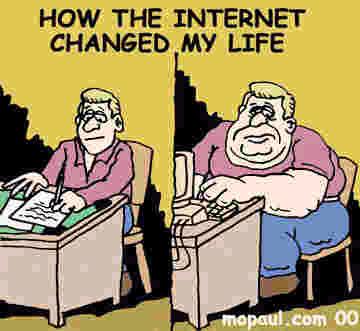
It’s Monday! Do you know who’s watching you? Monday is considered the day of fresh information. Everything is new new new! Consider this: the average 9-5er arrives at his/her desk in the morning (please refer to obese man above), turns on the computer, and tunes into msn.com for the week’s political news, reviews on which movie did best at the weekend box office, and anything else that might be hot off the press. On Monday, people want to know what they’ve missed since Friday (though is probably not much).

Do you take Mondays seriously? Treat your music like a job. Try to have something new on your page each Monday. Whether it be a blog, new shows on your calendar, a quick news update, new photos from the weekend’s show, or new video. The options are limitless and its not like you have to revamp your page every week…just do a little at a time.

Rule of thumb: If you build it, they will come. Read more about this at Drawing Traffic to your Website(s)

Wednesday
In college, my Communications professor told me something I will never forget: most people open their email on Wednesdays. Yes, this has been mentioned on Grassrootsy before, but its worth mentioning again. Wednesday is a unique day. Because it finds itself smack dab in the middle of the week, its the one day that you’re least likely to get “Out of Office” replies. More people at their desk = more people reading their email = more people visiting your website. Optimize on this. Send your newsletter on Wednesday mornings or afternoons if possible. Stop by Email Marketing – Making Sure People Read What You Write for more tips.

Rule of thumb: Send emails on Wed…in the morn or after lunch. Check out Grassrootsy’s additional blogs on Email Marketing here.

Weekends
Stats prove that few erpeople read emails and surf the internet on the weekends, but the people who do are more likely to read through an entire email and will spend more time on your web page than they would on a weekday. For example, if you sent an email on Wednesday, you might get 100 people to open and they would spend an average of 45 second skimming through what you write. But on a Saturday, only 40 people might open up the email but spend a full 3 minutes reading it entirely.

So if you’re posting a blog or sending a weekend email, make sure it’s not time-sensitive. Perhaps you can post musings, and non-essential thoughts. Take it from msn.com: Their weekend news bits are usually reposts of information that that was already used earlier in the week.

Rule of thumb: Never send an email on the weekend that you would send on a Monday or Wednesday.

Friday, June 12, 2009

Fan Interaction

When you’re a band, and you’re putting yourself out there into the public eye (instead of staying locked in the basement), everything you do can be viewed as an interaction with a possible fan. Everything. There’s the obvious – being on stage performing, selling merch, mingling after/pre-show, all really valuable opportunities to give potential fans a meaningful interaction with you, and you’re most likely going to be “on” when you’re in these situations, so you’ll already be able to make those interactions as meaningful as possible.

But what about the less obvious times? What about when you’re just out picking up beer, or gear, or working your day-job? What about when you receive an email from a fan, a facebook message, myspace comment?

Pretty much everything you do could be viewed as an interaction with a potential fan, so it might be interesting to try to think of ways to make all those situations just a little bit special. What if you gave the cashier at the beer store a download card for a free song? Went out of your way to comment back to someone online, or post something on your blog mentioning someone who recently sent you an email about the band, or what if you gave someone who’s buying a CD from you an extra copy for free, so they can give it to someone else?

There are all sorts of ways you can give someone just a bit of something more than what they would expect – all you have to do is find ways to tie those little extras back to your band, and try to genuinely incorporate that behaviour into your daily lifestyle. Suddenly everything you do could become an exercise in making fans, and if you give someone a little bit extra, something more than what they were expecting to get, you’ve increased exponentially the chance they are then going to tell someone else about you too.

Sunday, May 3, 2009

Creating True Blue Fans

Many artist & their bands can sing & play, but, they are amazed (sometimes mad) when the audiences fail to connect with them.  When, in reality, the artist and her band have failed to connect with the audience.

Artist and bands work on perfecting their play list of songs to sound like the studio version or the 'cover' version they hear. They throw in some comments; a few dance moves, differenct uses of the mic, etc.

Isn't that a 'Good Thing'?  To some degree, but when an artist and her band take the stage, their show becomes an experience that must entertain their audiences!  Everthing happening, on stage, is live.  There are no edits to make the show more entertaining.  What an audience sees & hears is what the artist and her band have created for them.  

If I go see a movie and it doesn't entertain, connect, or excite me, then most of the time I actually take short naps.  Do you want to look out, from the stage, and see many with their backs to you or sleeping or walking out the door during your first or second set?  Absolutely not....you want their attention focused on you and your band.

Most artist/bands never think about changing up a song to allow it to 'CONNECT' with their audience. And, if you don't connect and create special moments of memory, then, in most cases you will not have won over new fans & you certainly will not have what every artist should strive to have and that is:  

TRUE BLUE FANS!  Yes, that is a KSE exclusive.  TRUE BLUE FAN (TBF) are WHAT EVERY ARTIST MUST HAVE to sustain longevity as an INDIE touring band.  

TBF will become the most important part of your TEAM.  They will always be your biggest asset.  Without them, you're headed for a short lived career in music.  

TRUE BLUE FANS are fans that will show up for your shows with new fans. They are the ones that will buy tickets, merchandise, and leave tips in your tip jar, call radio stations, campaign daily for you.  They will create and help maintain a buzz about you. 

Most young inexperienced bands and some mature bands can only tour if they can meet expenses. To me there is nothing more boring than watching a talented band that never changes anything in their act except songs.  If you want to develop into a successful touring female artist, you and your band must have an everchanging show that makes audiences want to come out time and time again to feel and experience new memorable moments they feel connect you & them for a lifetime.  I assume all aspiring artist want to perform their music for a lifetime??

Developing into a "live" exciting and passionate entertainer takes time much practice, money, and developing TRUE BLUE FANS!  It's like going from grade, Jr. High, and High School to getting your Bachelors, Masters and your PhD.  After you have completed those degrees, you need continuing updates and training.  

All Roads lead to the STAGE must be incrementally & continually improved by mastering all the baseline stages.  Once this is accomplished, an artist & her band will forever be developing their passion into creative performances which make connecting moments that create lifetime memories that will change audiences into new fans.  These new fans will become lifetime TRUE BLUE FANS, which means SUCCESS,  for you, The Indie Female Touring Artist & Band.

==end