Artist Development covers many areas of an artist's music career. A career being defined as a combination of both creative and business items which must be planned and managed professionally. Done correctly will assure continual progress towards a successful music career.
Monday, March 7, 2011
Indie Music SUCCESS = ENDLESS HOURS OF WORK
Thursday, November 18, 2010
Music and Social Media Networking Events
Yes, they can help out a struggling INDIE artist as long as they realize most of these events are attending by establish social networking gurus. Most of these gurus are there to 'protect' their turf against outsiders. By this I mean, there are groups of well know music folks around America that do the 'scratch' my back and I'll 'scratch' your back routine. Any new person or group with as good or better ideas is shunned on and talked about in 'negative' ways. Many of these successful ones, forget at one time they needed help and were given help. Yet, instead of being mentors, they choose to be obstructiveness.
Wednesday, October 27, 2010
Ideas for Booking More Gigs
1. Create a YouTube channel for your band.
2. Print up nice business cards
3. Go watch other bands that sound like you.
4. Tell your fans how easy it is to book you.
5. Get guerilla.
6. Don’t forget the old school.
7. Network with key industry people at events and conferences.
8. Get creative.
9. Find places where bands similar to yours play.
10. Do a gig swap!
Sunday, October 17, 2010
Giving It Your All
Be ready to work you tail off. Through your work and efforts you will 'learn'. You will learn about many new areas of the music business, because, for the Indie Artist, Music is a business...A REAL BUSINESS.
As an Indie Artist you have total control and can't blame anyone else but yourself if things don't go right or don't get done.
As a woman Indie artist, the effort required to become successful will require 3X the effort.
All problems should be view as OPPORTUNITIES OF ABUNDANCE!
Flexibility means you must be patient, for patience is the key to Indie success. Hone your craft until your music shines and your band is 'tight' on all songs.
If what you are doing is not working, most likely it will not work until you discover other means to monetize you and your music. To me that key is in building a base of True Blue Fans. These are fans that promote you and your music 24/7 and they spend a minimum of $100 / year on you.
The stage is but one place where you connect with existing fans and make 'new' fans. Failure to connect is opportunities lost to build your True Blue Fan base.
Remember the only limit in music success, is YOU!
--end
Saturday, October 9, 2010
File Sharing, Why It's Here & Not Going Away
The digital music consumption systems and technologies promote different ranges of social behavior in fans; it’s part of the ongoing evolution of social music. Traditional systems and tech encouraged certain conduct, such as the gradual development of musical tastes and the act of collecting music in the physical form—both of which the record industry profited handsomely from. A new age brings new systems, technologies, and behaviors, to think fans and business models are frozen in time—untouched by these changes—is a fool’s errand. So too, there’s more choices in music now than ever and discerning which adds the most value to one’s life isn’t easy. Such an overload leads fans to pursue coping mechanisms like file-sharing. And, when fans fail to make good decisions, they feel burned and look for ways to even the scorecard with the industry and artists that brought those choices.
Wednesday, August 18, 2010
STARTING A FIRE
Have you ever built a fire? If you load up the big logs first, it doesn't take. You've got to start with very small twigs. You've got to nurture the flame, blowing air on it or gently using bellows. Then you lay on increasingly large pieces, not getting to logs until you're just shy of a conflagration. That's how you build careers today.
1. Focus on the music. You need at most four songs. Any more and you confuse the audience. Less is okay, but you want to encourage a story, you don't want to appear a one hit wonder.
2. As you gain traction, you put out more music. You don't worry about selling the original music to everybody on the planet, at this point you only focus on your core.
3. You make the music available. Don't try to monetize it at first, that just slows down the process of building your career. People can hear it streamed online, and they can download it and trade it.
4. Interact online, and don't talk down to your fans. Don't tell them you're the next big star. Hip-hop bluster is passe. Be thrilled that they're interested in you and your music. Tell them everything they want to know, and more. Put up pictures of your girl or boyfriend. Tell them what you do every day. If you've got a family, don't hide it, reveal it. Your goal is to humanize yourself. Artifice is so seventies. The Net community is about sussing out the truth. Give them the truth and your honesty will endear you to them.
5. Don't ask your fans to spread the word. Don't ask them to be street-teamers. Don't have a street team! If they like your music and you treat them well, they will spread the word just like a kid tells his mother about his new best friend. They won't be able to hold back. There's no money in it for the fan. So let him retain his dignity. Let him believe he's your best friend.
6. Don't alert the mainstream media. That comes last. Once you've built something, once you've got a story. Kind of like Dispatch playing Madison Square Garden. If your story is not interesting to those who don't care, don't tell it or sell it. Like I said, I'm not interested in vampire books, but the phenomenon intrigued me.
You're building a fan club. You don't want to let everyone in, you don't want everyone to come. When the nerds are partying, they don't want the athletes crashing, with their beer and belligerence. You're building a community of nerds. Nerds will build your band. If you're not interested in nerds, you'd better be Christina Aguilera, with a big voice and Top Forty airplay. Nerds need music to get by. They don't have enough of a social life. Their life is online. Nerds come first, then the popular kids, then the general public. You want people with plenty of time, to sit online and spread the word. Kids who know the ins and outs of the Web. This is your audience. Don't play to the last row, don't play to people who don't care. Chances are you're a nerd too, if you'd only admit it to yourself... You're playing music because you have trouble talking, meeting the opposite sex. Your online nerd-base wants to embrace you... LET THEM!
And if you're good, the casual user will find out about you and your music in the long run. Because mainstream media NEEDS a story, and you will have one. But since the publicity does not come overnight... Since you drove across the country, stopping in shopping malls and bars before you rocketed to the moon, your original fans will not abandon you, because they've invested time, they've got knowledge no casual fan can have. They're bonded, they're dedicated. They will keep you alive after your mainstream fame has dried up. But they won't stay with you if you switch allegiance, to all those people the nerds decry, in quick order.
Saturday, June 19, 2010
Everybody Doesn't Have To Like You
Yes, rejection sucks, but it's all part of the music process. The process of becoming a good or great artist/entertainer. Or, worse case, part of the reality of knowing you don't have a future as a self supporting artist/entertainer. Maybe you were meant to be a great writer, producer, road manager, etc.
Becoming a successful INDIE ARTIST entails so many areas, even having a 'little luck' along your journey. Success, in this blog, is defined as earning a living that pays all your bills without having to work a second job. Yes, music success is a real business that must have your attention 24/7. I know many artist who believe music success is nothing more than being able to play, sing, and entertain people and fans regardless of income earned for total support.
Rejection impacts artist in many different ways. Everything from anger, to hate, to depression, to developing a very thick skin, that propels most to work harder each day to gain more acceptance and fan support. Which means less negative emotional attitude. Learning to handle all the downs is but part of this process to reach the next higher level of your music career. All valleys have hills, sometimes mountains; all valleys change directions many times. A music career is a job, albeit a demanding and difficult one. But it can become a fulfilling and fun one provided artist remained focused on continuous incremental daily improvements. Most all artist start with high expectations only to find the road is not always paved and straight. Realizing all the family and Opry support was great, but, not extremely relevant in the real world of music. Rather, it more like pushing a heavy rock up to the mountain's top, before you can push it over to a more successful career. It's been labeled: PAYING YOUR DUES! In sales and marketing I call rejection a positive opportunity to develop and overcome adversities. Rejection must be allowed to roll off your shoulders, thereby, making you stronger, more determined, while keeping you moving forward.
Reviews that don't show you the love you expected are nothing more than learning experiences. I can assure you there will be many more to come. An artist grows and matures once they realize this is nothing more than a part of the music process. Today's critics can become tomorrow's biggest supporters or are dismissed by your fans and friends as totally non-credible because their opinions are just that....Their Opinions.
But, if the criticism is constructive, get over your bruised ego and make changes you think will work. Most of all, remember you are in the early part of your career and are after fans that support you. Those True Blue Fans will generate more positive support than any critic or disgruntle fan. Plus, you are looking for the first 100; then the first 1,000; then the first 5,000; then the first 10,000 fans, etc. If you must have an ego (most all artist and musicians do) try to develop an ego-free filter that processes only what is relevant while disregarding all the other garbage.
Make an "ANGER" file that will become your best listener with no criticism. Put one on your laptop or make one where you write with 'bottom' line clarity what you are really feeling....put these writings in your "ANGER" file and move on. This way you can move forward without the possibility of someone your trusted spreading rumors. You may even want to name the file: OPPORTUNITIES. Who knows, somewhere down the road you may write a great song from your ANGER/OPPORTUNITY file. Great songs do tell stories about real people's real feelings/experiences.
Rejections or being turned down are all part of the music business and part of life. If you believe in God, as I hope all artist do, mostly likely being rejected or turn down was not part of HIS plan for you. God always has a "HIGHER CALLING" for all of us...have faith in HIM to lead you in the right direction. He loves you and will never lead you down the wrong path. No one can ever take away from you what HE has for you. Sometimes not getting what you wanted, will save you from larger disappointments. Continue to work harder towards moving forward while pushing that rock up the proverbial mountain. Make personal time for yourself and look up....today the mountain top is closer than it was yesterday and have faith it will be closer tomorrow. Thank God for all your successes along this journey and ask HIM to continue with his daily guidance.
Final thought.....It's impossible to please everyone....so be like a duck that repels water regardless of how hard it's raining. You belief in your music will become the energy to discover those that feel the same.
---KleerStreem Entertainment
Female Artist Development
Sunday, June 13, 2010
Artist Press
-
Positive articles written about you are invaluable for building awareness. If you can't get articles written about you, at lest try to get quotes about you. Start locally and continue to move outward from your base. Asked local DJ's to play your music and to give you one liners. Build up a quote sheet for your press kit and for all your social media sites. Use these letter and quotes every time you can; if you do there is a great chance of a domino effect....newspapers, magazines, radio stations, and TV...they will think you are incredible! And, the bottom line, is everything will lead to more fans that will come out to see your shows.
Tuesday, December 29, 2009
Evolution of Music
Music 1.5 - the second generation of the music business where the product was primarily CDs, labels were owned and run by large conglomerates, MTV caused the labels to shift from artist development to image development, radio was still the major source of promotion, and CDs were purchased from retail stores.
Music 2.0 - the third generation of the music business that signaled the beginning of digital music, piracy ran rampant due to P2P networks but the industry took little notice as CD sales were still strong from radio promotion.
Music 2.5 - the fourth generation of the music business where digital music became monetized thanks to iTunes and later, others like Amazon MP3. CD sales dive, the music industry contracts and retail stores close.
Music 3.0 - the current generation of the music business where the artist can now communicate, interact, market and sell directly to the fan. Record labels, radio and television become mostly irrelevant and single songs are purchased instead of albums.
Monday, December 21, 2009
Music Business Other Sides
It persists. The other night I watched two great documentary-style biopics on TV, one on Johnny Cash, another on Willie Nelson. Willie, as many of his fans may not realize, was actually a Nashville songwriter penning such classics as “Crazy,” which Patsy Cline etched into the music lexicon. Despite his preeminent status as a writer, Willie couldn’t get arrested as an artist in Music City. His quirky phrasing was way too off-beat for the 60s sound, which was infused with sweet strings and pop arrangements.
At the age of 40, Willie returned home to Texas. Such a move would have meant a life sentence selling insurance had history not intervened. As fate would have it, Woodstock Nation had opened the doors to multiple music movements by the early 70s, and Willie realized that such hippie hangouts as Austin’s Armadillo World Headquarters were ready for a new kind of country artist. He enlisted his buddy Waylon Jennings, among others, and set about launching a novel sound to a new audience. His ultimate success turned country music, and the music establishment at large, on its head. Ultimately, he was responsible for redefining music, establishing its “outlaw” class and creating the Austin revolution as well as worldwide social activism that persists to this day.
Despite his huge outsider success, Nashville rejected this giant yet again. By the 1980s, you couldn’t find a Willie song on mainstream country radio, and forget about a major label deal.
Okay, let’s get right down to the hard part. Cash was just another music god to be tumbled unceremoniously from Olympus. By the 80s, he, too, was cast out like so much trash. His popularity was dwindling, and he was struggling to find an audience and make a living.
So these outlaw outcasts banded together, literally, forming the country supergroup The Highwaymen, along with Waylon and Kris Kristofferson. Talk about a Mount Rushmore of talent. They had taken fate into their own hands and, once again, set out to redefine the music scene, outside the establishment, all on their own.
A Bronx boy, I was still getting my country legs under me, when I hit Nashville in the late 80s. At the time, I couldn’t understand why the likes of Willie and Johnny weren’t getting mainstream air play, why I could eat lunch with Emmylou Harris but couldn’t hear her songs on country radio, why Nanci Griffith was considered a darling in all the clubs, to all the execs, but couldn’t get the chart toppers and eventually carped about it in interviews.
I was just getting introduced to the hard truth of the music industry: bitterness. Griffith was bitter, my friend Artie Traum (from back home in Woodstock) — one of the sweetest guys to ever grace the business — was expressing a degree of bitterness, too, in interviews of the day. I was just learning.
The songwriting trade in Nashville was rough. By year two, I was saying you had to learn to live on a diet of stones. Rejection was the blue-plate special everyday. It took me two years to get my first major song contract and more to get my first staff writing job and my first cut. Everyone who stuck with it had war stories: the song on hold that never happened, the artist cut that got dropped by the label or never got released as a single or didn’t make it above 20 on the charts. But, despite eventual successes and even industry support, I left after a decade to pursue a career as an artist, packing scars and wisdom, love and hate.
But back to Johnny Cash. One of the greatest artists to “walk the line,” he faced the pure pain of artistry more deeply, more movingly than anyone before him. Late in his career, with the help of producer Rick Rubin, Johnny faced his inner darkness, his demons, his truth, his soul. With such albums as “American Recordings” and “Unchained,” he found a vast and vital new audience, just years before his death. His new material was so raw that family members had a tough time listening. They told him it sounded like he was saying goodbye. He told them he was.
In the Cash bio, artists such as Sheryl Crow, John Mellencamp and Vince Gill expressed the true painful tumble that all artists must face. Mellencamp himself recently penned a telling if rambling article on the biz in HuffPost, a blog post that established a wellspring of conversation in the social media sector.
So, this little Bronx boy, who reeled from the Glenn Miller story and cut and broke his teeth on Music Row, finally came to understand bitterness and the role it plays in any music career. No one is exempt. It may be (excuse me) a bitter pill to swallow, but I recommend downing it to develop a good artist-immune system. Another words, one has to learn to deal with it, embrace it, pain and all, and find a way to move on. Carry it on your back, in your suitcase, in your heart, on your skin — the rose tattoo of the music artist.
Monday, December 7, 2009
Attracting Fans Means Getting Over Your Self
Don’t get me wrong, adding elements of stretching the mind and being creative is a great thing, but think about it as a later step or being placed a little deeper in your marketing rather than right there where people get their first impressions. Make it something that fans will have to dig in to as opposed to overly confusing the new listener or first time visitor to one of your social networking sites or website.
Wild stories, confusing bios, songs that make no sense or tie in to the more experimental side of you can be red lights for many people to not want to dig deeper. For example, if you are a grunge/industrial type band with fast loops, dirty guitars and in your face samples with brash harmonies and powerful hooks, having song sample number one on your site be one of the tunes that is least like your sound or one of your more experimental and say softer and more trancesque tune that you use right in between two powerhouse tracks, you may loose the interest right off the bat of the listener that happens to pop on to your website for a minute.
Get over yourself.
The reality is that when new people are visiting your website, your networking site or one of your song sample sites, most are only going to be there for a few seconds unless they are drawn in. There are 40 million Myspace music pages and that number continues to grow even as Myspace continues to go down in the rankings in the social networking world. People are being tossed links from spam emails, from friends, from strangers and from third parties everyday.
While every musician wants to think that people are spending a number of minutes listening to every sample, looking at every picture and reading every piece of text, the truth is the majority are only spending seconds and moving on very quickly. We are a nation of ADD, ADHD and every other acronym that points to the bulk of us having less and less of an attention span everyday.
These people have so many choices and so many options so it is up to you to grab them, wow them, explain and showcase to them and pull them in to want more. It is crucial just like having a fast pitch for industry professionals to also have that same fast pitch and grab for the fans and the masses.
Good Ideas vs Bad Ideas
A couple strong examples are the bands that have very fast loading webpages that immediately showcase the logo, the tagline, the image and information easily. Now on the other coin, there is a website for a band that actually has a small animal that walks around the page for some 10 seconds before the page opens and you cant skip it. This may be creative and cute for the band and for fans that know something about the reason behind the path and the creature but for a browsing new person, it just comes off as stupid. Another site has a band bio that is so small and so long with so many applications that have been added to their page that you are not sure who’s information is what, not to mention the slow load from having so much on the page.
Some of these websites or social networking sites where you are forced to scroll down or wait to find or fish out information is not helping you capture the new fans that are coming across your site. On the same side with the music samples. Instead of putting up total songs why not put up samples and a lot more of them?
Think about it, just as you should put together a small demo sample for any industry person so they can listen to the bulk of your songs with out the bulk of time it takes to listen to every song, you can do the same for your fans. Supply 20 to 30 seconds fade in and fade out samples that are clearly marked as samples with the time in the title. This way when a new fan sees the player or what ever you are using to present your music, they know right off the bat, they are getting samples and may just listen to them all.
This also gives you a chance to choose what they listen to and what you want to highlight in the song, instead of them flipping through and potentially just listening to the beginnings of all your tunes if they listen that far. Think of it like giving them a sample of everything and at that point making them want to dig deeper.
Conclusion
It is fine to go deep and make people think, make people have to search and challenge your fans but first get those fans through the door, interested in you and wanting to be challenged. Make sure you have created a crystal clear image that will demonstrate you, sell you and entice them to want more. It is a hard thing to sometimes separate what how you see something against how the bulk of the public will. Remember just cause you get it or it makes sense to you, it doesn’t mean it will to most people. You are the artist, you are right smack in the middle of it all and a big part of pulling in and creating the fan base is working on creating the right appearance and marketing to pull them in the audiences that are sifting through thousands of sites and turning them in to interested fans.
Also remember, with all the other bands on all the other sites and the over saturation of music and artists that are out there, it is crucial to pull them in to want to see more first. Make the first presentation easy, fast and simple so that people can get a clear idea of the overview of you, your music and what you are about, then you can start playing with the intricacies and extra details.
Wednesday, December 2, 2009
Getting More Fans
This has to be said at the start. In order to be approachable, you have to be modest in character. In order to deal with building a fan base one person at a time, you have to be able to mentally absorb the fact that it takes a bit of time. A huge ego will kill your chances at gaining real fans.
Do unto others…
I am going to keep this simple. The Ethic of Reciprocity is a universal thing. People do not like commercials like they once did. I am sure you are no exception, so cut with the “buy my stuff” approach.
Work on your handshake
This goes with the concept of being a friend first, artist last. You can do this by just taking the time to get to know a person. Introducing yourself, getting their name and offering your hand to solidify the connection is a great start.
Ask “What can I do for you?”
John F. Kennedy’s famous quote from his speech can be used here, but instead of country use fans. Set yourself up to be able to help. I have suggested to a few of my artist friends that they will find more opportunities by giving back to the community than taking from it. We are bombarded with people making requests of our time. Sometimes it is the best feeling just to be asked, “Can I help?”
Be a friend
Once you have established a relationship with your new pals, keep up with them! Make sure you know what is going on in their lives. As a musician, this is a great opportunity to get inspiration for your work. Everyone has stories, so seek out some from the very people you hope will support you. At the same time, fortifying your relationship with a few good people is the most important thing about all this.
In summary, do not be “that guy.” Set yourself apart by being genuine and kind. While this approach is a bit slower than pumping a ton of money into juicing use your sexy attributes, it is the most rewarding and the payoff is bound to be more fulfilling than anything plastic surgery could ever provide.
Wednesday, September 9, 2009
Showcase Gig
Definition:
A showcase gig, or just a showcase, is an introduction to an audience for a new act. Sometimes, labels use showcase gigs to get their new signees in front of the press, while other times, unsigned acts play showcase shows in the hopes of impressing someone in the industry enough to get a deal.
Showcases can be handy for labels or others who have enough pull to get the right people out to see musicians, but beware showcases that charge unsigned musicians a fee to pay. Some of these showcases charge thousands of dollars for minutes on stage, and there is absolutely no guarantee that anyone who can do your music career any good will be in the audience. In fact, chances are, they won't be. If you are tempted by a paid showcase opportunity, do your homework and find out who attended past events and whether anyone has ever had success finding a deal at that particular event. Most worthwhile showcases, like showcases at music industry trade shows, do not charge musicians to play.
Friday, September 4, 2009
The Music Biz Then & Now
– Guest Post by Frank Joshua
Some 20 years ago I was a struggling musician in London playing every shitty venue in town trying to get a ‘deal’. As I look at the music biz from this perspective I’m wondering;
- a) what are the connections between what I learned then and what I see now and
- b) what is the single most important factor in making music in either era?
What I was sure of back then was that without a label or publisher no one could be successful. And barring the odd exception this was true. You made yourself into a killer live band and leave it to the label that was lucky enough to sign you to sort out making a huge album. All you had to have was the talent.
Now-a-days things have obviously changed. Sure there are big name artists who’ve become totally ‘independent’ having benefited from the marketing muscle of the labels for years. And labels are still breaking artists, though they’re desperately looking for new revenue streams in the process.
However it’s also now possible to be a Small Musical Enterprise (SME) running everything from song-writing to point-of-sale from a bedsit, in theory making a decent living, without ever becoming a major artist in the conventional sense.
What I regret most about my previous encounter with the music biz (there are plenty of things BTW) is not spending enough time on recording. The adage of ‘keeping it real’ is still very true as Godamus Prime explains so well in an earlier Evolvor post.
But if I had to pick on one thing that I wish I’d done differently all those years ago in order to give myself a better shot, it would have to be time spent on recording. Don’t get me wrong. There are lots of other things hindsight has taught me but when I listen back to our recordings from those years I wish I’d spent more time on them.
So my plan is to see how far a 40-something guy can take this new world order and to document the process. I’m not deluded enough to think that I can, with no previous track record to speak of, break into main stream music at my age. But I am keen to see how far an old man, with a few good tunes can take the new era.
My experiment involves putting my money where my mouth is. I’ve got myself a great producer in Tony White and am spending the money I have on his time in order to make the best recordings of my songs we can. I’m allowing the process to take a lot of time if it has to, even scrapping whole tracks (much to Tony’s annoyance) and starting again if I feel we have to.
I’m working with great musicians and so far I think we’ve got two tracks out of the ten we started near completion. You can follow the process via my blog. Which brings me on to the second part of the time equation. This involves me leaving Tony to get on with what he does best while I try and work out the other vital part of being an SME.
It’s blindingly obvious that the other essential part of today’s music biz is all the online stuff. And again what this needs it seems is huge amounts of time. For me ReverbNation, augmented by a blog, Twitter and the likes of Digg make up the essential tool kit.
I think MySpace and Facebook have their place but I’m betting that the next big breaking-an-act-in-a-new-way thing will come via ReverbNation. But there are other people better qualified than me to make these sorts of judgements.
I’ve no idea how far this will go or where it’s leading but I encourage you to drop in on me and see from time to time. And to spend time on your stuff and not be scared of the time it takes.
And one final thought. I’m actually enjoying making music now. Something that I can’t say was always true in the past. And maybe that’s the most important thing now I come to think of it.
Afterthought
I was watching some old music footage from the sixties recently and was reminded how strangely uncomfortable the artists were with the promotion process. They looked awkward on TV as if this was an afterthought to the creative process of making records, which was probably true.
And it made me wonder if things haven’t turned full circle. I feel like I often see artists who’ve spent more time thinking about the TV/promotion side of things than the recording. Maybe that’s because it’s easier to make great sounding records these days. Maybe it’s because things like audio quality are less important in an age of mp3.
But maybe in an age of SMEs, what we really need to go back to is focusing on the recording. Maybe we just need to think about making records that sound great and make us feel something without the need for promotion to make it sell. An ‘if you build it they will come’ idea of sorts. Or at least the idea that in a market the size of the internet you don’t need to worry about the lowest common denominator?
Sunday, August 2, 2009
Artist Failure
everything. Being a successful artist requires so much more than just being a great singer”
You are welcome to contact KleerStreem Entertainment for an honest discussion of marketing you and your music.
KleerStreem Entertainment is an artist development company. We address and plan all areas of an artist's career.
Email: kleerstreem@gmail.com
Monday, July 20, 2009
Each Day, Do Certain Things
Hey, What Day is It? (Getting Into The Consumers Head)

Are you planning your music marketing according to specific days of the week? You should be? Check out this post for sure-fire ways to make the most of your online promotions.
Monday
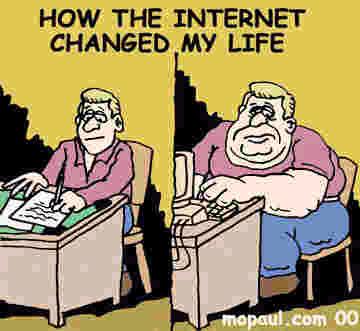
It’s Monday! Do you know who’s watching you? Monday is considered the day of fresh information. Everything is new new new! Consider this: the average 9-5er arrives at his/her desk in the morning (please refer to obese man above), turns on the computer, and tunes into msn.com for the week’s political news, reviews on which movie did best at the weekend box office, and anything else that might be hot off the press. On Monday, people want to know what they’ve missed since Friday (though is probably not much).
Do you take Mondays seriously? Treat your music like a job. Try to have something new on your page each Monday. Whether it be a blog, new shows on your calendar, a quick news update, new photos from the weekend’s show, or new video. The options are limitless and its not like you have to revamp your page every week…just do a little at a time.
Rule of thumb: If you build it, they will come. Read more about this at Drawing Traffic to your Website(s)
Wednesday
In college, my Communications professor told me something I will never forget: most people open their email on Wednesdays. Yes, this has been mentioned on Grassrootsy before, but its worth mentioning again. Wednesday is a unique day. Because it finds itself smack dab in the middle of the week, its the one day that you’re least likely to get “Out of Office” replies. More people at their desk = more people reading their email = more people visiting your website. Optimize on this. Send your newsletter on Wednesday mornings or afternoons if possible. Stop by Email Marketing – Making Sure People Read What You Write for more tips.
Rule of thumb: Send emails on Wed…in the morn or after lunch. Check out Grassrootsy’s additional blogs on Email Marketing here.
Weekends
Stats prove that few erpeople read emails and surf the internet on the weekends, but the people who do are more likely to read through an entire email and will spend more time on your web page than they would on a weekday. For example, if you sent an email on Wednesday, you might get 100 people to open and they would spend an average of 45 second skimming through what you write. But on a Saturday, only 40 people might open up the email but spend a full 3 minutes reading it entirely.
So if you’re posting a blog or sending a weekend email, make sure it’s not time-sensitive. Perhaps you can post musings, and non-essential thoughts. Take it from msn.com: Their weekend news bits are usually reposts of information that that was already used earlier in the week.
Rule of thumb: Never send an email on the weekend that you would send on a Monday or Wednesday.
Thursday, June 11, 2009
TODAY'S Indie Development
Looking deeper, into the details, one must recognize this will involve assembling a trusting team of passionate professionals. This team’s charter is to get this long train (the artist) moving. As with a long train, no matter it’s destination, the train, always begins moving slowly.
Major record labels are not longer the “engine”, at most, they are only the caboose, Some trains no longer have a caboose, because trains, have figured out the caboose was just extra weight they had to pull & really were not beneficial in helping them reach their destination. Cabooses were painted red, which to a train signaled “The End”.
Will there always be a need for labels, maybe, but, their success will depend on how much they are willing to become an asset & not an impediment to an artist career. When labels start listening to what fans/customers want is when their roles may become more important. When they are willing to change their business models to benefit the artist and connect with fans, is the day their importance will stop diminishing. If they do this, all artist need to recognize there will still be few slots to fill. So, most artist will continue to be truly independent. This means becoming more involved not only in their music, but, in the business end. Assembling a lean knowledgeable team that is totally committed to building a large fan base which is & will continue to be, the “key” to their success.
Do you have your team in place?
Sunday, May 24, 2009
INNOVATIVE ADVERTISING
Oh advertising! Is it really worth it as a musician? Well, it depends. Where are you advertings? What are you advertising? And do you have money? Of course you want to try to get as much free publicity as possible. If you can do it for free, definitely go for that option!
When you do get the funds, check into these ideas. The great thing about the following options is that you can advertise at whatever price is affordable for you.
And in continuation to Monday’s blog, Finding Your Niche, the below suggestions allow you to advertise directly to your niche.
StumbleUpon
Its a great source for people who wanna find good things online. StumbleUpon doesn’t just focus on music. It exposes surfers to every type of website in the world. How does it work? Lets say you wanna get your myspace out to a unique type of listener (See yesterday’s post: Finding Your Niche). Click on StumbleUpon Advertising and create a campaign. As you create your campaign, you’ll see that you can choose what types of people you want to visit your website – everything from people who are history buffs to people who are vegetarian, to people who like kayaking. Tons of random categories.
So what if your music appeals most to men, maybe you’d want to pick people who fall into the following categories: home improvement, mens issues, video games. Or if you think your music has ambience that best fits the spiritual guru/yoga type crowd; you might want to pick people who fall in the following categories: yoga, self improvement, ambient music.
You’re also given the option of choosing age range, geographic location and other demographics. StumbleUpon only costs .05 cents per view. So you could spend $20 on advertising and that would expose your website to 400 people. Check out their short video tutorial.
Facebook (and Myspace)
Its much the same concept as Stumble Upon: i.e. target audiences, demographics and all that jazz. One thing I’ve noticed and like about Facebook ads is that it allows you to pay for impressions by the thousands. So that means, if you set your ad price as 20 cents per 1000 impressions, your ad will show up on the side panel of 1000 facebook pages. Whether 5 people or 500 people click the impression, you still only pay 20 cents per 1000. I’ve found that Facebook isn’t as straighforward as StumbleUpon and takes a little time to understand.
I haven’t tried Myspace advertising, so if you have experience, please comment below.
The Pizza Boy (ya, for real!)
During the week of his CD Release, Pittsburgh artist T. Mitchell Bell stopped into his local pizza store, and asked them if they would be able to distribute flyers for his CD release everytime they had to make a delivery. AWESOME idea! They let him do it for free b/c he was a very regular customer!
Stop into your local restaurant, whether it be a pizza store, or something else. Ask them if they’d be willing to do the same. You might have to pay a little something but its a great idea ( they’ll treat you better if they know you). It’s one of the best ideas I’ve heard lately and I think its probably effective.
House Concerts
Ever wanted to have a captive audience in an intimate setting where you could share your favorite songs, a few jokes and stories, make a few bucks for your efforts and do a little healthy self-promotion all in one evening, maybe without even leaving the comfort of your own home?
This sounds a little too good to be true but “house concerts” have been a growing trend, especially for acoustic artists over the last two decades. What works for the singer-songwriter can also provide good venue vibes for vocalists. Remember that you don’t need an elaborate performance to make an impression, you want to keep it simple to minimize potential headaches and glitches.
So what do you need to get started and pull things off without freaking out or having too many technicalities to overcome?
Setting The Scene
Obviously you need a staging area. This can be a rec room, sunroom, or large living room. It can be a porch or sundeck, a backyard, front yard or garden area. If you’re in the country it could be a barn or stables area. Near the river or ocean, it could be the sand in front of a beach house. You want an area that will be easy to set up, maintain and control traffic flow. You can ask people to bring chairs or lay out blankets and tablecloths to create a casual, picnic atmosphere.
If you don’t have a space of your own to perform in, check with a neighbor or friend who might have a space or get them to ask around. The first goal is to secure a spot for your concert so that you can get the word out and set up some future gigs. You might even ask around about who is holding yard sales and set up your house concert as entertainment for the neighborhood after a day’s hard work, sort of like a block party.
Dishes And Tip Jars
It’s also a great idea to have food available. It could be a potluck or simple finger foods and drinks. You might have an outdoor grill or pit for barbecue. Again, you want to keep it simple but satisfying for those who show up to hear you.
To be financially rewarded, you can set up a tip jar, pass the hat or a basket, or charge a flat admission fee. Just to be on the safe side, check with local zoning laws for the area where you’ll be performing. If it can be implied that the concert is a business venture you may have to comply with safety issues and permits. In most cases this will not be an issue.
Building Support
One of the reasons that house concerts can be a viable way of making some money and building a following is that people crave a sense of community. Music has a way of building bridges and bonding people together. It is a shared experience that is frankly good for the heart and soul. It’s also a good idea to include songs that lend themselves to audience participation on occasion. Just to make it a little more fun.
Self-Promote
House concerts are usually promoted via the Internet, fliers, and word of mouth. Ask each of your friends to bring two of their friends to the concert. This is one way to guarantee that you’ll have a relatively full house.
After your concert make a pitch for your availability. Have ready-made flyers or business cards available with contact info or even a CD with a few songs.
This is a great way to make a cozy connection between heart and home. It’s a connection that is naturally reinforced by the human voice engaged in song.